Raphis Palm Indoor
Rhapis excelsa
SKU : MPS01038
NaN AED
Inc.VatLimited Stock
height
pot
Delivers to:
Product Care:

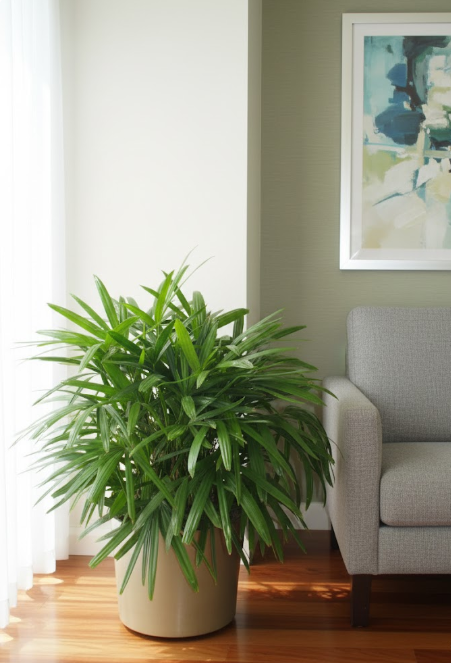

Rhapis excelsa
SKU : MPS01038
A broadleaf palm belonging to the Arecaceae family of palm trees, the lady palm grows natively in tropical and subtropical regions. Because of its bamboo-like stems that produce individual, fan-shaped palm fronds composed of tiny spikes, it is also known as a bamboo palm. Lady palms spread by way of underground rhizome offshoots, which give rise to the plant's massive underground root systems. Due to their low maintenance needs and ability to thrive in almost any environment, lady palms are a popular choice for indoor plants. Lady palms are perfect for tabletops or as free-standing tropical decorations because they can reach heights of up to 14 feet or stay as small as two. Additionally, because the lady palm grows slowly, you won't need to move it frequently or change pots.
Plants that are tough and fairly hardy are broadleaf lady palms. To ensure the success of your lady palm, heed these suggestions.
1. Periodically prune your lady palm. The lowest leaves of the lady palm will eventually wither and darken as it ages. Since pruning these might create scars on the stems of the plant, it is advisable to do it before they fall off. In order to prevent harm to your tree's trunk, look for newly developed stalks that don't mature and trim them off.
2. Verify that your palm is receiving adequate moisture. Although rhapis palms require very little care, if you don't give them enough water, you may observe brown tips on their leaves. However, take care not to overwater your palm as this can cause root rot. When the ground is two inches dry, water your lady palm.
3. Keep an eye on your illumination. Lady palms tolerate low light levels well, but they flourish best in bright, indirect light. Try turning the pot of your lady palm so that all of its sides are exposed to the sun if it isn't growing.
4. Keep an eye out for fungus and pests. Mealybugs and spider mites can be challenging to find and access because they frequently hide in the fibrous bases of lady palm leaves. Use a systemic insecticide for optimal protection; do not spray as this will harm the foliage. Though rhapis are resistant to most diseases, they can still get root rots from Penicillium, Fusarium oxysporum, and other sources.