Categories:
Loading...
Cyclamen, a genus of flowering plants in the family Primulaceae, comprises several species prized for their ornamental flowers and attractive foliage. Here's a description of Cyclamen:
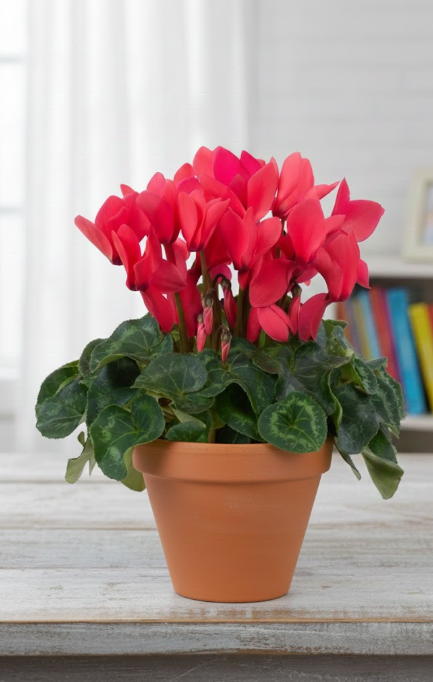
Foliage: Cyclamen plants typically have heart-shaped or rounded leaves with distinct patterns. The leaves often have silvery marbling or markings, adding to their decorative appeal. The foliage emerges from a central bulb-like structure known as a corm.
Flowers: Cyclamen plants produce delicate, nodding flowers on slender stems that rise above the foliage. The flowers have upswept petals with flared tips, giving them a distinctive appearance. Cyclamen flowers come in a range of colors, including shades of pink, white, purple, and red. The blossoms may have a sweet fragrance, adding to their charm.
Varieties: There are several species and cultivars of Cyclamen, each with its own unique characteristics. Common species include Cyclamen persicum (the florist's cyclamen) and Cyclamen hederifolium (the ivy-leaved cyclamen). Cultivars may vary in flower color, size, and foliage pattern.
Seasonality: Cyclamen plants are popular as winter and early spring blooming houseplants. They often bloom from late fall through winter into early spring, depending on the species and growing conditions. Cyclamen flowers can last for several weeks, providing a burst of color during the cooler months.
Growing Conditions: Cyclamen plants prefer cool temperatures and bright, indirect light. They thrive in well-draining soil that is kept evenly moist but not waterlogged. Cyclamen should be watered from the bottom to avoid wetting the foliage, as excess moisture on the leaves can lead to fungal diseases. Adequate humidity is beneficial, especially in dry indoor environments.
Dormancy: After flowering, Cyclamen plants may enter a period of dormancy where they naturally reduce growth and conserve energy. During dormancy, foliage may wither and die back. It's essential to reduce watering and allow the plant to rest during this time. With proper care, Cyclamen will typically revive and produce new growth when conditions are favorable.
Pests and Diseases: Cyclamen plants are generally resistant to pests and diseases when grown in optimal conditions. However, they may be susceptible to issues such as root rot if overwatered or fungal diseases if exposed to excess moisture. It's essential to monitor the plant for signs of pests or disease and take appropriate action if necessary.
Overall, Cyclamen plants are prized for their elegant flowers, decorative foliage, and ease of care. Whether grown indoors as houseplants or outdoors in garden beds or containers, Cyclamen adds a touch of beauty and charm to any setting, especially during the cooler months of the year.


.png)


